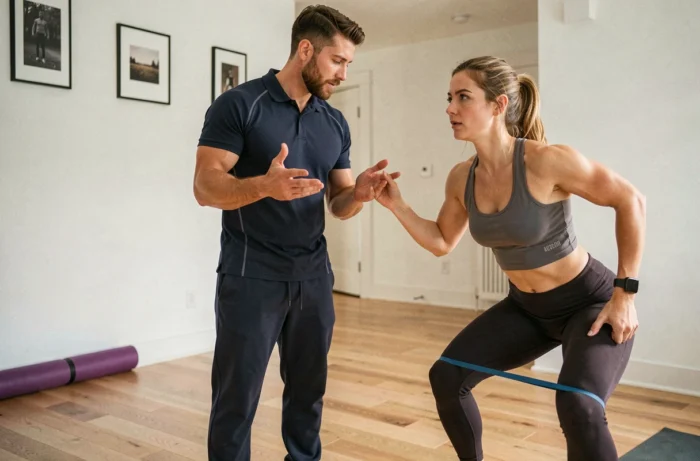
A home sports coach is a qualified professional who designs and supervises personalized training sessions at your home, adapting each exercise to your physical condition, constraints, and goals. Finding the right one is not just about comparing prices or reading online reviews: it is primarily a matter of verifiable qualifications, compatibility with your profile, and often overlooked legal frameworks.
Professional card and public register: the first filter for choosing a sports coach
Before looking at a coach’s background or personality, check an administrative point that eliminates the majority of unreliable profiles. In France, every paid sports coach must hold a professional card issued by the administration. This card certifies that the diploma has been verified and that the professional is authorized to supervise the activity they offer.
The public register allows you to consult the exact prerogatives of a coach. A holder of a BPJEPS specializing in “fitness activities” does not have the same recognized skills as a graduate in adapted physical activities (APA). If you have a chronic condition or a specific need, this distinction changes everything.
This verification takes a few minutes and protects you against self-proclaimed profiles. By browsing the sports site of Mon Coach A Domicile, you can access coaches whose qualifications match various objectives, from fitness to targeted physical preparation.
Sports coach diplomas: BPJEPS, STAPS degree or CQP
Three main pathways lead to the profession of sports coach, each providing different skills. Understanding these distinctions helps in choosing a professional suited to your project.
- The BPJEPS (Professional Certificate of Youth, Popular Education and Sport) is the most common diploma for home coaching. It trains individuals to supervise various physical activities, with a specific mention (weightlifting, fitness activities, etc.).
- The STAPS degree (Sciences and Techniques of Physical and Sports Activities) offers a broader academic foundation. Certain specializations, such as APA-Health, prepare individuals to support vulnerable or rehabilitating populations.
- The CQP (Professional Qualification Certificate) covers a more limited scope. It authorizes supervision within a specific framework, often related to a sports federation.
A coach displaying a “certificate” issued by a private organization not recognized by the state does not meet the legal conditions to supervise for remuneration. This point remains the most common trap when searching online.
Home sessions and online coaching: what changes for qualification
Online coaching has significantly developed, and many coaches now offer a hybrid follow-up combining physical sessions at home and video support. Qualification obligations also apply to remote sessions as long as the coach teaches, leads, or supervises a physical activity for remuneration.
This point has a direct consequence on your search: a coach who only offers online follow-up without a valid professional card operates outside the legal framework. Check this point before committing to a mixed program, even if video sessions seem less “supervised” than an in-person class.
Adapting the format of sessions to your sports goals
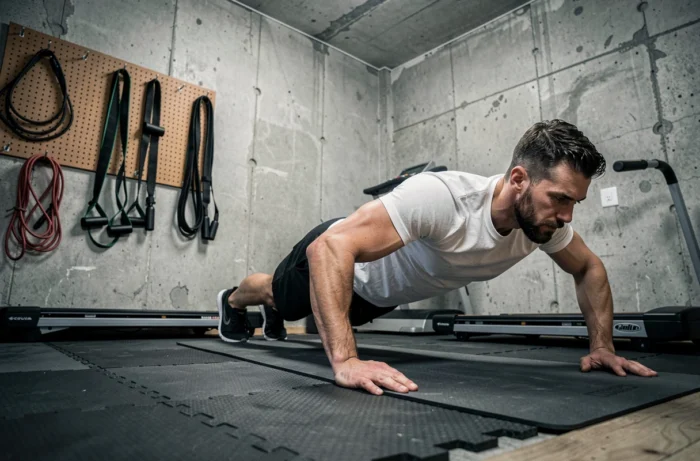
Home coaching works particularly well for bodyweight training, muscle strengthening with small equipment, and mobility work. If your goal involves heavy weights or specific machines, discuss feasibility with the coach before signing.
A good coach adapts their sessions to the available space in your home. Ask for their progression plan for the first four weeks: a competent professional knows how to explain the logic of their programming without excessive jargon.
Tax credit and personal services: reducing the cost of home coaching
Individual home sports coaching can fall under personal services, provided that the service provider is registered in this capacity. If so, a tax credit can reduce the actual cost of sessions by half.
This eligibility is not automatic. It depends on the status of the coach or the intermediary organization, and specific conditions related to the service. Before considering this arrangement as a given, ask the coach if they are registered as a personal service provider and if they accept CESU (Universal Employment Service Check).
The financial impact is significant: a session that seems too expensive at the displayed rate can become affordable once the tax credit is taken into account. This is a selection criterion to integrate from the start, not afterward.
Specific profile or chronic illness: when general coaching is not enough
For someone living with a chronic illness, a joint problem, or a disability, general sports coaching is not always suitable. A diploma in adapted physical activities (APA) specifically trains individuals to support these populations, with knowledge of contraindications and medical protocols.
Some programs allow for partial reimbursement of APA sessions as part of a care pathway. If your doctor has prescribed adapted physical activity, look for a coach holding a STAPS degree with an APA-Health mention rather than a traditional physical trainer.
The difference is not limited to the diploma: an APA coach knows how to read a medical prescription, adjust intensity based on biological markers, and communicate with the healthcare team. This level of competence cannot be improvised with a short training course.
The choice of a home sports coach relies on concrete verifications (professional card, recognized diploma, registration as a personal service) much more than on an impression during a first exchange. Start with the register, then ask three questions: what diploma, what prerogatives, what tax status. The rest, the method, human contact, regularity, is built session by session.