What 2024 decor trends are truly changing the way we design interiors, and which are just visual gimmicks? Between the return of saturated colors, modular furniture, and increasing demands for sustainability, the criteria for choice are no longer limited to style. This article compares the major trends of the year based on concrete factors: materials, usage constraints, and air quality.
Bright colors, dark wood, and raw materials: a comparative table of 2024 decor trends
| Trend | Dominant materials | Concerned rooms | Point of caution |
|---|---|---|---|
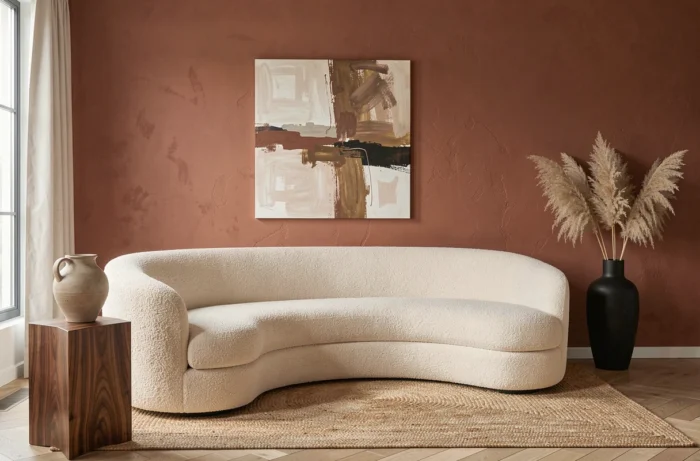
| Saturated colors (bright pink, Klein blue, terracotta) | Wall paints, textiles | Living room, bedroom | Check the VOC label (class A+ to C) |
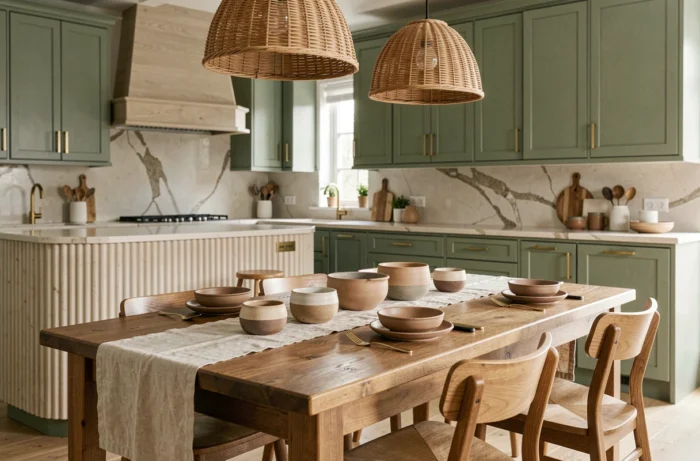
| Dark wood (walnut, stained oak) | Solid wood, veneer | Dining room, office | Availability of spare parts for furniture |
| Modular furniture (convertible sofas, extendable tables) | Metal, wood, technical fabrics | Small spaces, multifunctional rooms | Wear of mechanisms in the medium term |
| Organic shapes (curves, irregular lines) | Ceramics, blown glass, resin | Decoration, lighting | Fragility of certain handcrafted pieces |
| Maximalism (patterns, layering) | Wallpaper, velvet, brass | Living room, entryway | Risk of rapid visual saturation |
This table shows that each trend carries a technical criterion often absent from inspirational articles. The “point of caution” column distinguishes sustainable choices from impulse purchases.
To keep up with these developments over the months, Belle Déco news helps identify the new trends that are establishing themselves sustainably.
VOC labeling and air quality: the decor criterion that no one compares
Paints, glues, and decorative coatings sold in France must display a volatile organic compound emissions label, rated from A+ (very low emissions) to C (high emissions). This classification has existed for several years, but trend guides rarely mention it.
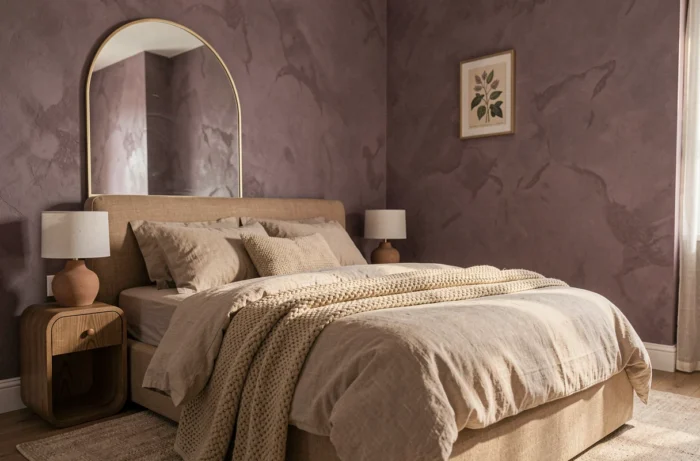
When repainting a living room in Klein blue or terracotta, the choice of shade often takes precedence over reading this label. The problem is particularly acute in bedrooms and poorly ventilated spaces, where emissions of formaldehyde or toluene remain concentrated for longer.
How to read the label before buying
- Look for the pictogram on the pot or packaging: the letter A+ indicates the lowest emissions, while class C corresponds to high levels
- Ensure that the paint is tested after 28 days of drying, not just at application, as some formulations release compounds for several weeks
- Maintain daily ventilation of the room for at least two weeks after application, regardless of the displayed level
This criterion also applies to adhesive wallpapers and soft floor coverings, two products that are very present in the maximalist trend of 2024.
Modular furniture: real durability versus the promise of versatility
Extendable tables, convertible sofas, reconfigurable shelves: modular furniture dominates decor searches for small spaces. The promise is appealing, but the longevity of these pieces depends on a factor rarely highlighted in inspirational selections.
The framework of the REP (extended producer responsibility) for furniture elements for the 2024-2029 period emphasizes repair and reuse. In practice, this means that the availability of spare parts becomes a purchasing criterion on par with design or price.
What distinguishes durable modular furniture
A convertible sofa whose mechanism breaks after two years of daily use ends up in a landfill, not as a vintage piece. Before buying, checking if the manufacturer offers replacement parts (springs, hinges, rails) changes the game.
The ease of disassembly also matters. A piece of furniture made of modules assembled with screws allows for simple repair. A glued or stapled piece leaves no room for maneuver. A repairable piece of furniture extends the trend beyond the season.
Maximalism and patterns: the gaps between living room trends and overall interior trends
The living room concentrates the majority of searches related to maximalism: wallpaper with large geometric patterns, cushions with abstract prints, layering of textures between velvet and brass. Competitors present this trend as a uniform movement, applicable everywhere.
In reality, maximalism works differently depending on the room. In an entryway or hallway, saturated wallpaper creates a threshold effect that energizes the space. In a bedroom, the same visual density can generate a sensory fatigue that pushes one to change everything after a few months.
Revisited vintage patterns or contemporary patterns
The modernized vintage trend of 2024 mixes references from the 70s and 80s (curves, warm colors, velvet textures) with contemporary lines. The result depends on the proportion between vintage pieces and neutral elements.
A living room where the rug, sofa, and light fixture all follow the same aesthetic direction quickly tips into historical reconstruction. Limiting strong personality pieces to two or three per space preserves the readability of the decor without sacrificing boldness.
The most useful decor trend of 2024 is not the most photogenic. Between VOC labeling that conditions air quality and the reparability of modular furniture that determines its lifespan, technical criteria weigh as much as the choice of a color or pattern. An interior that ages well is built on these trade-offs, not just on a seasonal palette.