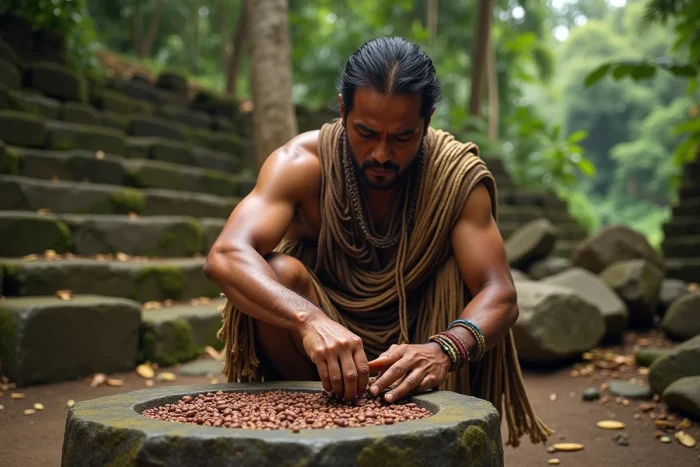
In 1519, in the Valley of Mexico, a handful of beans could be exchanged for a rabbit or a service rendered. Cacao was not just a simple food, but a true currency, a symbol of rank, an offering to the gods, and sometimes, a privilege fiercely defended. Three continents, five centuries, and dozens of innovations later, chocolate remains imbued with this unique aura, torn between heritage and modernity.
The Origins of Chocolate: Rituals, Myths, and Uses in Pre-Columbian Civilizations
Long before the appearance of tablets, cacao had already carved out a special place in Amazonia and Central America. The Olmecs were among the first to domesticate the Theobroma cacao tree, cultivating beans that would nourish powerful beliefs, practices, and legends. Among the Mayans and Aztecs, the bitter spiced drink distilled its aromas during major ceremonies: nothing among them resembled the sweet or milk chocolate of European origins. Reserved for the elite, the drink embodied order, strength, prosperity, and even death. In the Popol Vuh, cacao slips into the grand stories of the creation of the world.
More than just a pleasure or a treat, cacao also served as a medium of exchange, a vector of power, or a form of tax payment. To settle purchases, honor the gods, or pay tribute, the beans held the value of sesame. The elites crafted the finest beverages, while the common people awaited the leftovers. Cacao was found in ointments, at the bottom of tombs, and even within the most rigid social hierarchies. With Xochiquetzal, the goddess of fertility, it was integrated into the heart of rituals.
Are you looking for a concrete immersion into these fascinating uses? For everything you need to know about chocolate and pre-Columbian civilizations, discover the secrets of bean transformation, the codes of ceremonies, and the persistence of a sacred vision of cacao, inherited from a rich and diverse history.
How Cacao Conquered Europe and Transformed Eating Habits
The arrival of chocolate in Europe is the result of a succession of curiosities, exchanges, and adaptations. Christopher Columbus brought cacao beans back to Spain without sensing the magnitude of the phenomenon. But at the court of Philip II, the cacao infusion eventually captivated the nobility: initially bitter, it saw sugar, vanilla, or cinnamon added, creating a refined sweetness that gained traction.
When Anne of Austria crossed the Pyrenees to marry Louis XIII, she arrived with the precious chocolate in her coffers. France quickly seized it. From Bayonne to Italy, through Switzerland, Germany, and the Netherlands, each country adapted the recipe to its own tastes and traditions. The era saw the recipe soften, enrich, and assert itself across all social strata.
Gradually, technical transformation changed the game. When powdered milk arrived in the 19th century, milk chocolate also disrupted usage. Trade internationalized, industrial processes multiplied, and markets opened. In Bayonne, tradition took root: the city became a reference not only for the quality of its chocolates but also for the bold craftsmanship of its local artisans.
Secrets and Innovations: Modern Chocolate Between Traditions and New Trends
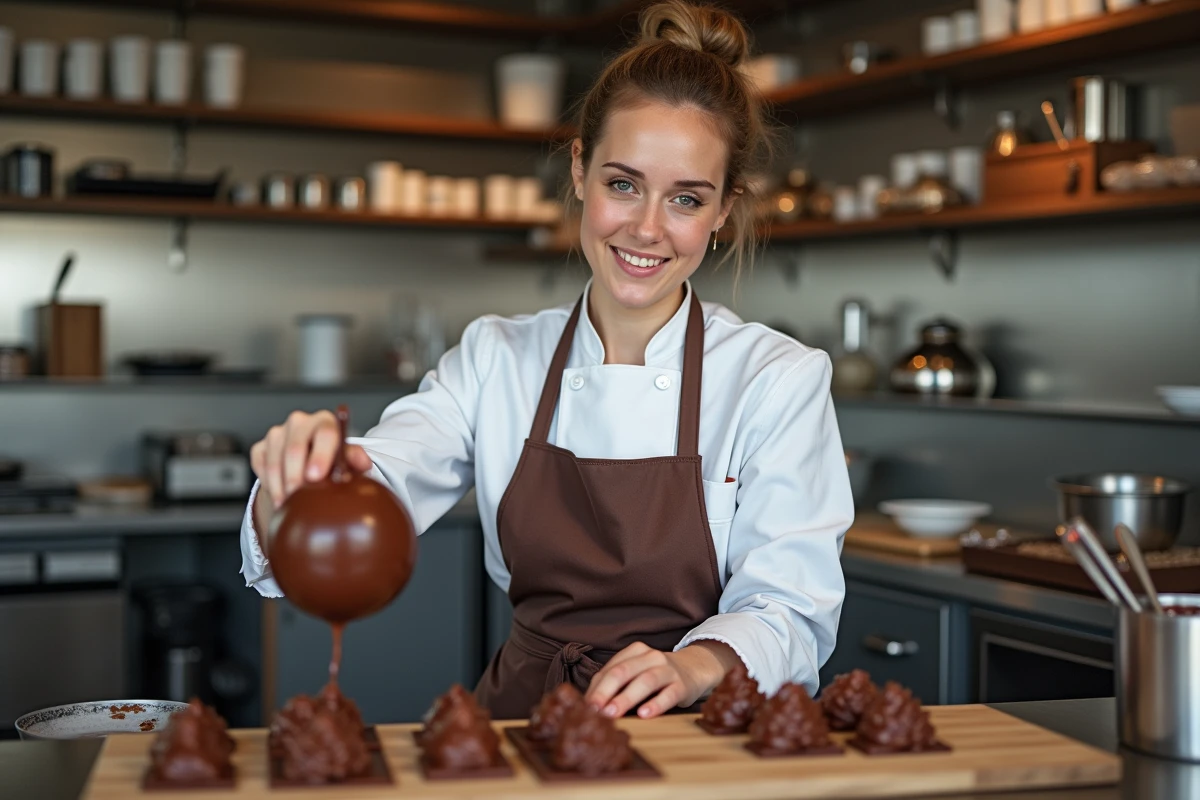
While modern chocolate is rooted in a millennia-old heritage, it is constantly being rethought. Master chocolatiers select beans with rigor, refine the cacao paste, and orchestrate the blending of flavors. In today’s arena, artisans and industrialists stand apart: the former focus on uniqueness and craftsmanship, while the latter emphasize productivity and wide distribution.
To grasp the specifics of today’s chocolate, let’s clarify the major steps that contribute to its diversity:
- The extraction of cocoa butter, which allows for the creation of white chocolate by retaining only the fat from the bean.
- The discovery of cocoa powder by Van Houten, facilitating the preparation of drinks and cakes without sacrificing the intensity of flavors.
- The invention of the tablet, now essential, which lightens service and extends shelf life.
Behind this evolution, several challenges drive the industry. Labels such as Fairtrade or the Rainforest Alliance work for traceability, fair compensation for producers, and respect for the terroir. The bean-to-bar movement pushes for total traceability, from bean to bar, valuing the origin and authenticity of the product. Now, master chocolatiers select specific harvests, assert a desire for innovation, and multiply refined creations in search of distinction.
This simple act of biting into a square of chocolate transcends the centuries: with each bite, it remains a witness to a human adventure where indulgence meets inventiveness. Who knows what unexpected flavor will shake up the already long history of chocolate tomorrow?