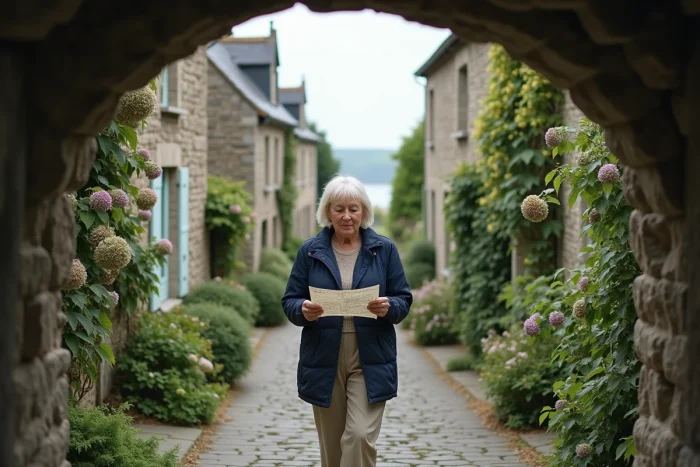
Ploubazlanec occupies the northern tip of Goëlo, in Côtes-d’Armor, facing the English Channel and the Bréhat archipelago. The commune owes its reputation to centuries of deep-sea fishing towards Iceland and Newfoundland, a past that has shaped its ports, chapels, and coastal crosses.
Today, the village also serves as a base camp for exploring coastal trails, discreet anchorages, and outdoor experiences that most guides do not connect.
Coastal Trails of Goëlo: Ploubazlanec as a Starting Point to the Cliffs
Tourist content about Ploubazlanec focuses on the maritime heritage of the town. They overlook a practical aspect: the village is located at the junction of several sections of the GR 34, which lead south to the cliffs of Plouha, considered the highest in Brittany by recent guides.
Starting from Ploubazlanec on foot allows you to first follow the coast of Paimpol, then shift to less frequented sections of the trail. The terrain changes quickly: the low beaches of the port of Pors Even give way to steep slopes covered with heather and gorse.
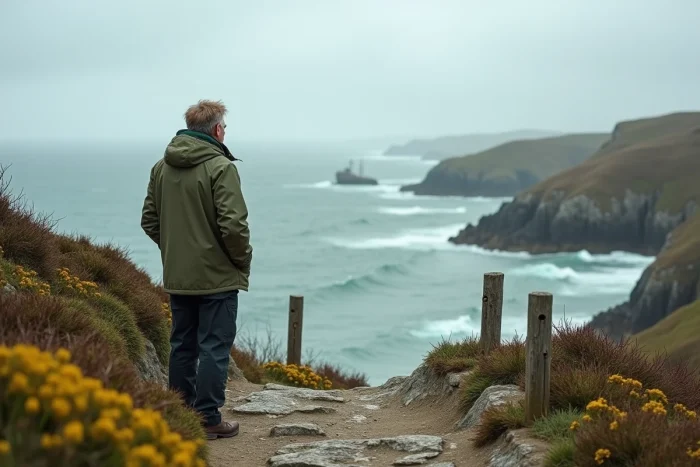
The GR 34 connects Ploubazlanec to the cliffs of Plouha without detours, making it a coherent coastal hiking route over several days. Hikers staying in the village can organize daily loops southward or to the tip of Arcouest to the north, without needing to take the car.
Field reports vary on the difficulty of certain sections between Plouézec and Plouha, where erosion alters the path from season to season. Checking locally before setting out remains the most reliable precaution.
Loguivy-de-la-Mer and Pors Even: Two Ports, Two Functions
Ploubazlanec has several port hamlets, but two stand out for their current roles. Loguivy-de-la-Mer remains an active fishing port, one of the few in the area to maintain a professional fleet. The activity is visible at high tide when the boats return with their catch.
Pors Even, a few kilometers away, has shifted towards recreational use and swimming. The slipway serves as an embarkation point for the Bréhat archipelago. Between the two, the difference in atmosphere is clear:
- Loguivy offers businesses related to fishing, a fish market, and restaurants serving the catch of the day. The atmosphere is that of a working port, not a marina.
- Pors Even attracts families for its sheltered beach and direct access to shuttles to Bréhat. The hamlet is quieter off-season, almost deserted during the week.
- The trails connecting the two ports follow the coast along an easy section of the GR 34, suitable for children. The route offers an unobstructed view of the Trieux and the islets offshore.
This duality gives Ploubazlanec an advantage that few Breton coastal communes possess: a vibrant port and a leisure port just minutes apart.
Memory of Icelandic Fishermen: What the Stones Tell
The Wall of the Disappeared, in the Ploubazlanec cemetery, lists the names of sailors who died at sea during fishing campaigns in Iceland and Newfoundland. The place is simple, without staging. The granite plaques bear hundreds of surnames, sometimes several members of the same family on the same line.
This memorial gives a concrete dimension to the novel Fisherman of Iceland by Pierre Loti, whose action takes place in this port. Reading the engraved names after having gone through the book changes the perception of the text. The relationship between fiction and reality tightens over a few square meters of stone.
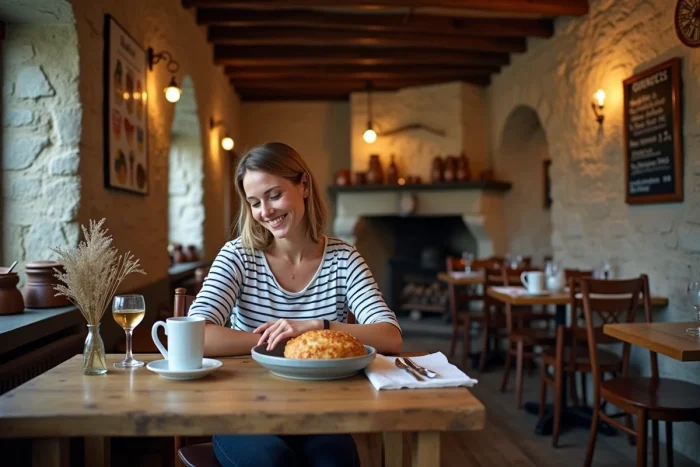
The Widow’s Cross, on the nearby point, complements this memorial landscape. The wives of sailors waited there for the return of the schooners. The site has not been transformed into an attraction: it is a rocky promontory with a cross, nothing more. This lack of scenography makes it one of the most direct places on the Breton coast to understand what deep-sea fishing has cost families.
Staying in Ploubazlanec to Explore Bréhat and Paimpol
Research related to Ploubazlanec increasingly includes vacation rental inquiries. The village is used as a base for multi-night stays, with daily excursions to the Bréhat archipelago, the center of Paimpol, or the Beauport Abbey.
The appeal of this positioning lies in the immediate proximity of the embarkation points. From the tip of Arcouest, within the territory of Ploubazlanec, the crossing to Bréhat takes only a few minutes. Staying on-site avoids the round trip from Paimpol or Saint-Brieuc and allows for more flexible shuttle schedules, especially early in the morning when the archipelago is less crowded.
The accommodation offer mainly consists of seasonal rentals and guest rooms, scattered among the hamlets. The available data does not allow for a precise overview of prices or capacities, but the rental fabric seems oriented towards self-catering stays rather than traditional hotels.
For families or hikers, Ploubazlanec offers direct access to the sea, trails, and shuttles without relying on a tourist city center. The village remains residential, meaning few shops are open in the evening, but also few queues in the morning at the port.
The compromise is there: a stay in Ploubazlanec focuses on the proximity to the coast and tranquility, at the cost of a more limited dining and service offer than in Paimpol. For those seeking a calm anchor point on the Goëlo coast, this is precisely what makes the difference.