A complete puzzle loses an average of three pieces before its fifth use. This statistic surprises even the most organized enthusiasts. Improvised storage methods often accelerate this phenomenon, despite good intentions.
Managing puzzles at home is no longer just about saving a few pieces from the carpet. Other questions arise: how to prevent the cardboard from getting damaged, find the right game without rummaging through an entire shelf, or give a place to those beautiful pictures assembled with patience? Organizational systems, much more varied than one might think, easily replace the original boxes, which are often too bulky or impractical.
Why organizing puzzles well changes the lives of kids and parents
The puzzle, at the crossroads of leisure and learning, deserves a minimum of method to reveal its full potential. Prioritizing structured storage lightens spaces, reduces conflicts at playtime, and encourages children’s independence. A cluttered or overflowing collection quickly demotivates even the most enduring.
Caring for each piece is more about logic than fussiness. The slightest missing piece is enough to turn the activity into a futile headache. Conversely, clear organization ensures a complete experience, almost without unpleasant surprises. Everyone benefits: the child becomes more independent, and parents see their daily lives lighten. Additionally, some children enjoy sorting, classifying, and managing their games themselves, without waiting for an adult to come and put everything back in order.
Another less visible benefit when sorting is done at the source: duplicates are avoided, time is saved when choosing the puzzle, and unnecessary purchases are limited. Sorting by theme, number of pieces, or difficulty simplifies selection, according to age or preferences. For those looking for concrete tips, you will find practical tips on Astuces Parents.
To give a quick overview of what good storage really changes, we can highlight:
- Fewer lost pieces, hence fewer disappointments
- Simple routines to establish for tidying up after each session
- More independence: children can actually manage their games without constant help
What practical and clever storage solutions to preserve children’s puzzles?
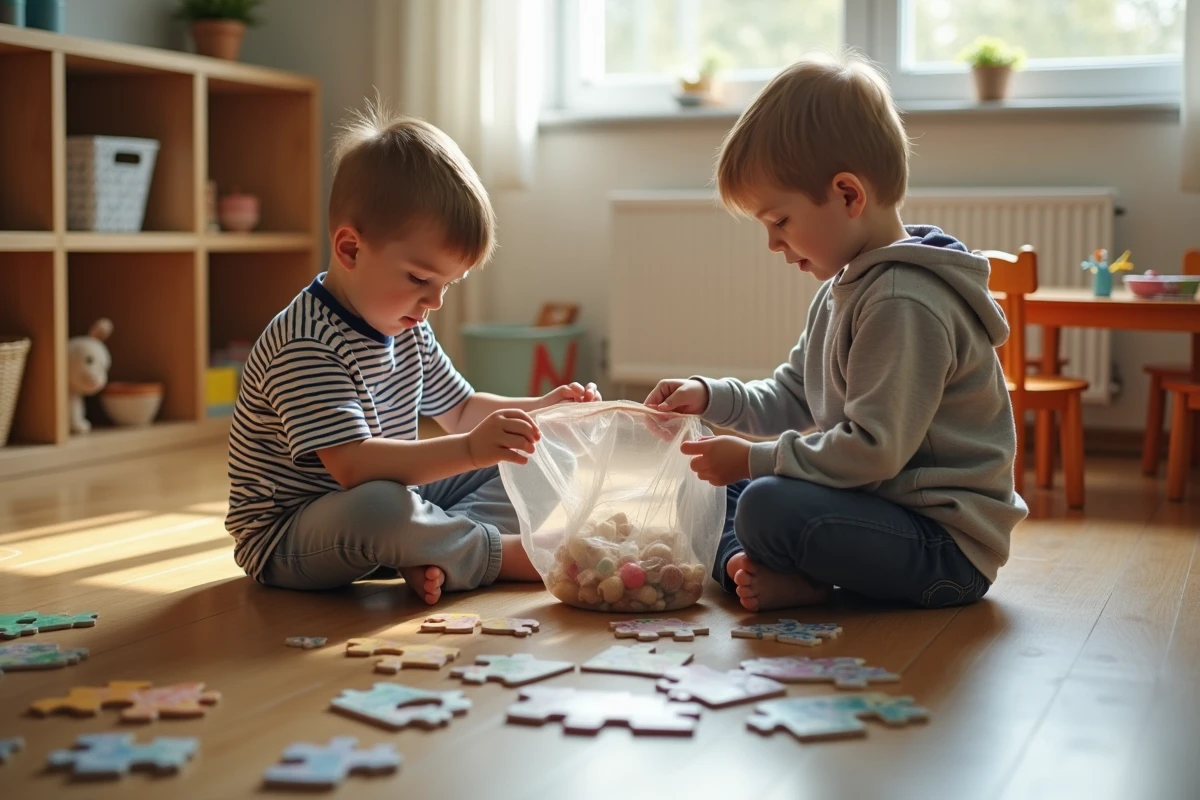
When boxes and formats pile up, chaos invites itself into the room. However, it only takes a few supports adapted to the family rhythm for each puzzle to find its place. Zip pouches, compartmentalized boxes, or binders with plastic sleeves help to store faster and limit breakage. Designing each system based on the child’s age or available space helps avoid losses.
Homemade supports appeal to families who enjoy DIY. For example, a piece of thick cardboard reinforced with tape becomes a mobile tray: practical and sturdy. Transparent boxes provide an immediate view of the contents, the level, or the puzzle’s visual. When every inch counts, sliding disassembled puzzles into labeled fabric pouches (number of pieces, photo of the model) frees up space and restores the desire to play.
To organize puzzles effectively, a few key points deserve attention:
- A classification by size or number of pieces for quick and easy access
- A small temporary box to gather misplaced pieces until they are found
- Recycling damaged packaging into personalized homemade supports
Involving children in choosing or creating the storage system encourages their engagement. Gradually, order settles in without constraint, and playtime no longer drags on. The whole family enjoys a calm space, and the lifespan of puzzles benefits. With each new game, the pleasure of an accessible challenge arises, without stress or logistical headaches.
Showcasing completed puzzles: creative ideas to try as a family
A finished puzzle is not just a temporary decoration. It reflects quiet persistence, collective effort, and a shared story on the living room table. Valuing these works gives meaning to the activity and enlivens the walls. A few frames, a board, or even a sturdy cardboard can quickly transform the assembly into the trophy of the month. Sometimes the room becomes a gallery, and sometimes the entrance gets a colorful touch.
Some opt for a collective dimension: the puzzle glued to a board, customized with names or anecdotes, ready to enter the family collection. Others prefer to alternate: puzzles displayed with repositionable strips, according to preferences or the season. Regularly changing invites to start over, to take on new challenges, to refresh the decor while keeping the spirit of play.
To vary the ways of showcasing puzzles, here are several ideas suitable for all households:
- Hang completed puzzles with string and colorful clips to create a decorative garland
- Build a collective mural where each child displays their achievements
- Photograph masterpieces before storing them and create a memory album, without overloading the shelves
Making space for the puzzle after assembly is to give each creation its own story, a trace of that shared time. On the walls or in an album, these games become memory, pride, motivation, and the promise of new adventures to invent piece by piece.