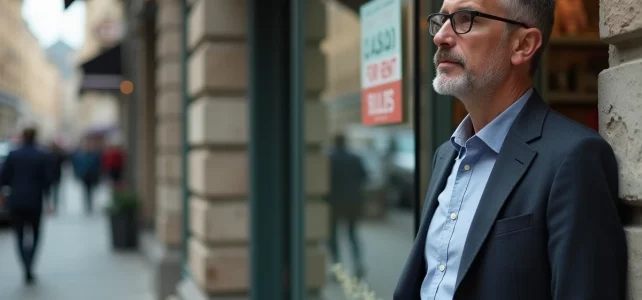
250,000 accounts deactivated all at once: this is the harsh reality faced by users and owners during the closure of Zilok in April 2024. No warning, no ready-made solution. For many, the established model of peer-to-peer object rental collapsed overnight. Competitors are trying to pick up the pieces, but the transition proves chaotic. Those who regularly rented are already mentioning concrete losses that no new player has compensated for to date.
The regulatory void does not help. Despite the disappearance of a historic leader, no specific adjustments have emerged in the law to accompany the transformation of the sector. On the ground, new economic and legal power dynamics are taking shape, shaking fifteen years of habits and certainties.
Read also : The latest news on animal liberation and animal rights advocacy
Why the closure of Zilok marks a turning point for the rental market
The rental sector in France has entered a zone of turbulence since the disappearance of Zilok. The consequences of Zilok’s closure go far beyond the mere disappearance of a site; they expose the fragilities of an entire ecosystem, even as rental offers are scarcer than ever. Against the backdrop of a housing crisis, the slightest flaw in the chain has immediate repercussions. Add to this the tightening of standards, the Climate and Resilience Law, increasingly strict energy performance diagnostics (DPE), and the hunt for energy-inefficient homes, and the entire rental model is shaken.
In practice, real estate players are experiencing unprecedented pressure. Rising interest rates, increased property taxes, and increasingly complex taxation: each new constraint disrupts the balance. Owners are questioning the profitability of their properties, while rental listings are dwindling rapidly. The abrupt halt of Zilok is therefore not trivial: it instantly deprives thousands of people of an essential channel, disrupts the flow of goods, and weakens supply and demand.
Further reading : The Influences of Fashion on Society: How Trends Shape Our Culture
This event also highlights the weakness of alternative platforms, often ill-equipped to absorb such a shock, especially in a context where regulations are constantly evolving and user expectations are changing rapidly. Professionals are seeking new benchmarks, forced to cope with uncertainty and the need to invent sustainable solutions. The rental market, already under pressure, finds itself at a crossroads, caught between questioning and the need for immediate adaptation.
What concrete impacts for individuals and professionals?
For owners, the disappearance of Zilok feels like a wake-up call. Many relied on the platform to secure their rentals and maintain a flow of income. Now, accessing reliable tenants is becoming more complicated, managing security deposits is riskier, and the fear of unpaid rents or damages looms over every transaction. Finding a solid guarantor or an appropriate insurance solution can sometimes be a headache.
For tenants, the domino effect is just as real: fewer available listings, stricter access conditions, real estate agencies multiplying checks to avoid fraud or document falsification. Applications pile up, delays lengthen, and the pressure on candidates’ incomes continues to grow, especially in cities where rent control is becoming widespread.
Professionals, too, see their daily lives becoming more complex. Between managing schemes like the Pinel Law, the Visale guarantee, or keeping up with numerous reforms, administrative tasks take center stage. The demand for secure housing is skyrocketing, but the centralization once ensured by Zilok is disappearing, forcing agencies and managers to rethink their organization.
The result: precariousness is increasing in rental journeys, whether one is an owner or a tenant. Maintaining a balance between landlord protection and tenant rights becomes a tightrope act, especially in an environment weakened by the sudden disappearance of a key player.

Towards new models: what alternatives are emerging after Zilok?
This sudden withdrawal of Zilok has triggered a wave of initiatives, some of which might never have seen the light of day otherwise. A new playing field is opening up for rental platforms looking to renew their offerings, play the trust card, and simplify the user journey. In the 2024 rental market, creativity has become a necessity.
The platforms that are thriving are those that innovate: securing payments, automated management of security deposits, transparency on eligibility criteria. The short-term rental sector, for example, is expanding its services. New models are emerging, combining furnished rentals, co-living, or leases tailored to the needs of mobile workers. Local agencies, previously overshadowed by digital giants, are finding their place again thanks to their local knowledge and the human proximity they offer.
Regulation is also following a dynamic trajectory: an increase in measures to regulate furnished rentals, verification tools for applications, solvency checks, and increased attention to data protection. These developments resonate with both owners and tenants, all in search of solid guarantees.
Several trends are clearly emerging, worth observing closely:
- The diversification of rental offers, with an emphasis on reliability and ease of use.
- The rise of dematerialized solutions, allowing for frictionless management of contracts and payments.
- A renewed interest in local players, whose expertise and responsiveness appeal to a clientele tired of impersonal platforms.
In this context, professionals are continuously readjusting their strategies. The rental market, pressured by demand and the rapid transformation of practices, is searching for new footholds. The future will not simply be a return to the past: it promises to be fluid, inventive, and more uncertain than ever.