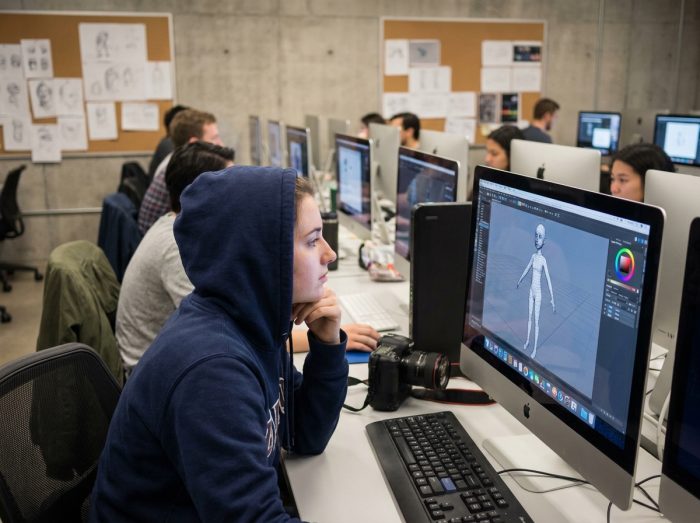
In 2026, training programs dedicated to video games are showing record enrollment rates in France. This phenomenon goes beyond a mere trend. The ruling from Matignon validating the integration of video games and esports into official educational pathways has sent a strong signal: the video game sector is no longer a marginal pastime; it is a focus of educational policy.
When Passion Becomes a Pedagogical Lever in Video Game Schools
Have you ever noticed that a passionate student learns faster than a resigned one? Video game schools leverage this dynamic. They recruit individuals who already spend hours modeling characters, coding mods, or composing soundtracks.
This motivational capital changes the classroom dynamic. A C++ programming course seems dry in a traditional computer science curriculum. The same course, applied to creating a game engine, engages a different level of attention. The passion for video games shortens the learning curve.
To better understand video game schools and their appeal, one must look beyond the brochures. The real driving force is the alignment between a deep interest and a training framework that takes it seriously.
Schools have understood this: rather than offering lectures followed by practical work, many structure their pedagogy around complete game projects from the first year. The student is not preparing for a theoretical exam; they are delivering a playable prototype.

Shortage of Senior Profiles in Studios: An Opportunity for Young Graduates
The Canada Media Fund has pointed out a demographic phenomenon that French schools are also observing: studios are struggling to replace their senior talents. Retirements are accelerating in an industry that has only three decades of professional maturity in France.
This shortage creates a paradoxical situation. Companies seek experience, but the talent pool is drying up. As a result, young graduates are accessing positions of responsibility earlier than before.
What This Means for a Student in Training
A game designer graduating from school could wait several years before leading a project. Today, some studios entrust artistic direction to profiles with two or three years of experience, due to a lack of more seasoned candidates.
This reality fuels the appeal of schools. Students do not enroll in a long program without a visible career path. They see former students quickly occupying concrete positions. Rapid professional integration is the best recruitment argument.
Video Game Training in France: What Distinguishes Serious Programs
Not all schools are equal, and this is a point that enthusiasts sometimes underestimate. Enthusiasm for the sector can mask major differences between programs.
Here are the criteria that help filter reliable training programs:
- Multidisciplinary team projects from the first year, combining programming, game design, animation, and sound design, just like in a real studio.
- A network of partner studios for internships, with verifiable agreements and not just logos on a web page.
- Instructors who are still active in the industry, capable of conveying the real production constraints (deadlines, budgets, tools used in the studio).
- A progressive specialization: programs that offer a common core before branching into game design, gameplay programming, or 3D animation better prepare students for market realities.
A program that promises to train “video game creators” without specifying the targeted profession sends a vague signal. Studios hire programmers, level designers, animators, not generalist profiles without identifiable specialties.

Institutional Recognition of Video Games: A Game-Changing Signal in 2026
The ruling from Matignon integrating video games and esports into official educational pathways has changed families’ perceptions. When the state validates a field, parents are less hesitant to finance training in that sector.
Beyond Matignon, the Influence of French Productions
The Pégases 2026 highlighted award-winning French games on the international stage. This recognition feeds a virtuous circle: recognized French productions attract vocations, which fuel schools, which train the teams for the next award-winning games.
French video games are no longer seen as a niche sector. They represent a part of the cultural industry with needs in animation, computing, narrative writing, and project management. Schools that train for these professions directly benefit from this new legitimacy.
The Generational Factor
Students entering training in 2026 mostly belong to Generation Z and the first Alpha profiles. They have grown up with games as a social tool, not just as entertainment. For them, working in video games is not a gamble; it is a logical progression.
This demographic evolution pushes schools to adapt their pedagogy. New students arrive with already solid informal skills: modding, streaming, content creation. The role of the school is to structure these acquired skills, not to start from scratch.
The appeal of video game schools in 2026 rests on a convergence of concrete factors: a demanding industry that is hiring, official recognition that reassures families, and students who arrive already equipped with years of personal practice. The challenge for training programs now remains to transform this passion into verifiable technical skills for recruiters.