
On a a rainy Saturday afternoon, no desire to go out, no desire for screens. We rummage through a drawer, stumble upon an old pot of acrylic paint and a piece of fabric. Two hours later, we have a customized cushion and the feeling of having done something useful. This is often how creative activities settle into daily life: by accident, using what we have on hand.
Reuse and repair: creative hobbies that extend the life of objects
We talk a lot about creative hobbies like painting, scrapbooking, or knitting. Less about repair. Yet, it is one of the practices that has been growing the most in recent years, driven by fab labs, collective workshops, and solidarity garages.
The principle is simple: you come with a broken or worn object, learn how to restore it, and leave with an additional skill. A collective documented by L’Info Durable organized 12 workshops and enabled the repair or making repairable 300 objects in two years. This is not a national statistic, but it gives an idea of what a small motivated group can produce.
These practices encompass everything that makes hands-on sustainable activities more satisfying than a simple purchase: a technical gesture, a concrete result, a skill passed on. Sewing a bag, replacing the sole of a shoe, repairing a small wooden piece of furniture—these are fully-fledged creative activities. And they cost almost nothing in materials.
To explore other concrete ideas, there are suggestions categorized by type of practice on leisure on Ouvre Tête, which helps quickly identify what matches one’s level and desires.
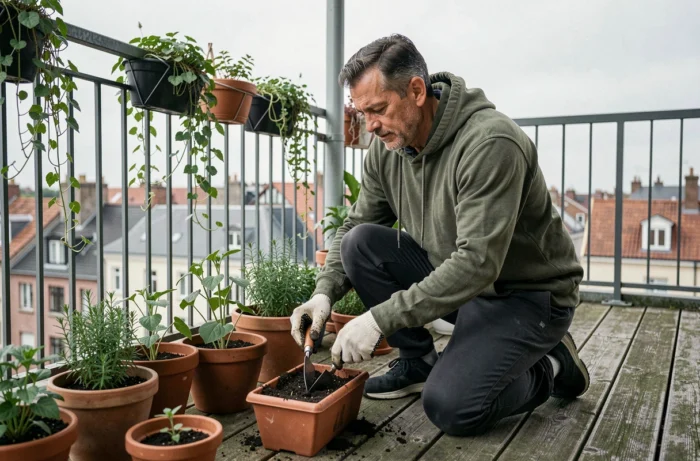
Short creative activities: lasting without getting discouraged
The main barrier to creative hobbies is not the lack of ideas. It’s time. We think we need three hours ahead to paint or mold, so we postpone. And we never start.
The current trend is toward formats of two hours or less, both in organized workshops and in home practice. This short time slot works better because it fits into an evening or a Sunday morning without disrupting the rest.
Three activities that can be done in less than two hours
- Paper collage: cutting images from old magazines and assembling them on a cardboard base. No need to know how to draw; the result is immediate and each piece is unique.
- Painting on pebbles or small found objects: we paint directly on a found surface during a walk or from a drawer, using acrylic and a fine brush. Drying is quick, and storage is minimal.
- Creative journaling (or visual notebook): a mix of text, sketches, and collages in a notebook. We dedicate twenty minutes or an hour to it, without pressure for results. It is both a creative hobby and a tool for relaxation.
The idea is not to produce a finished work at every session. It’s better to have a regular thirty-minute habit than a creative marathon every three months.
Safety of creative materials: what the European regulation changes
We rarely think about it when buying a creative kit for adults or children, but the composition of materials matters. Glues, paints, pigments, foams: everything we handle with bare hands or in a closed space deserves a minimum of attention.
The General Product Safety Regulation (EU Regulation 2023/988), applicable since December 13, 2024, strengthens the obligations of manufacturers and distributors. Online marketplaces are now concerned: they must verify the traceability and compliance of the products they list.
For consumers, this changes several things:
- Creative kits sold online must include clear instructions on the risks associated with use, including for adults.
- Materials intended for children remain subject to the EN 71 standard, which covers mechanical safety, flammability, and the migration of certain chemical elements.
- Checking for the CE mark and the presence of instructions in French remains the most reliable reflex before purchasing a kit, especially on a marketplace.
Feedback varies on this point, but several specialized retailers indicate that the majority of non-compliant products they identify come from third-party sellers on generalist platforms, not from brands specialized in creative hobbies.
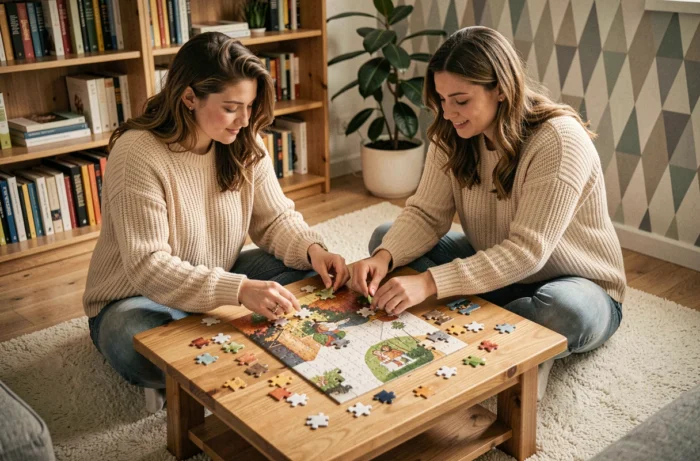
Choosing a creative activity suited to your daily life
You don’t choose a creative hobby like you choose a movie. The activity must adapt to the space, budget, and available time, otherwise it ends up as a box stored under the bed.
Before ordering materials, we can ask three practical questions. How much space is available for storage and practice? An apartment without a dedicated table points towards notebooks, crochet, or embroidery, not ceramics.
Alone or accompanied? Some activities are better shared (repair workshops, collective painting), while others are ideal solo (puzzles, watercolor, writing). What is the relationship to the result? If you want a finished object quickly, painting on found objects or collage works well. If you prefer a long-term project, scrapbooking or building wooden models offers more depth.
The classic trap is to invest in expensive materials before testing. Starting with what you already have at home—paper, scissors, leftover paint, old clothes—allows you to validate your interest before spending.
The most sustainable creative hobbies are rarely the most spectacular. They are the ones you pick up on a Tuesday evening without thinking, between dinner and bedtime, because the materials are accessible and the gesture has become familiar.